




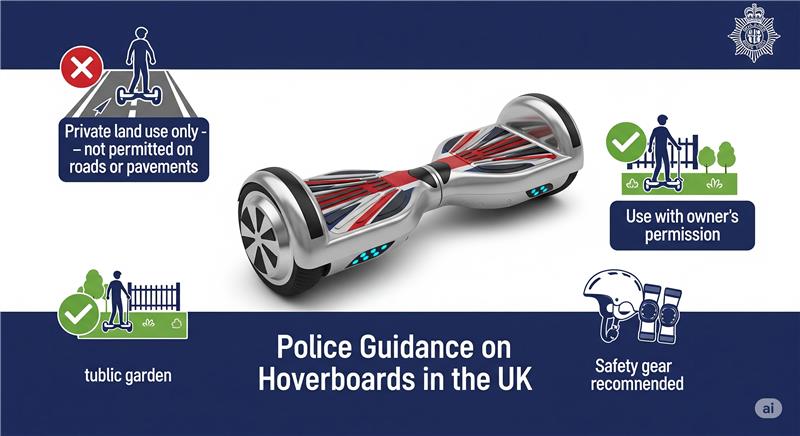

For those thinking about gliding on a hoverboard in the UK, the police advice is straightforward, unambiguous, and firmly based on current legislation. Private hoverboard are illegal to use on public roads, pavements, and most other public spaces. Although these self-balancing gadgets are readily accessible for purchase, their practical application in the UK is highly restricted.


-1693482306.jpg)
The essence of this guidance arises from the legal classification of hoverboard. According to the Road Traffic Act 1988, hoverboard (as well as e-scooters and other "powered transporters") are categorised as motor vehicles. This classification subjects them to strict regulations that, importantly, hoverboard are unable to comply with.The Police Stance: No Public Use
Law enforcement agencies throughout the UK consistently emphasize that hoverboard are not permitted for public use. Their advice underscores the following essential points:
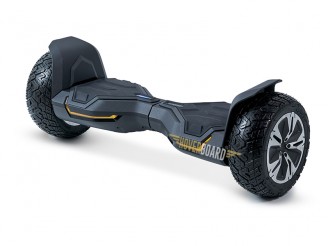

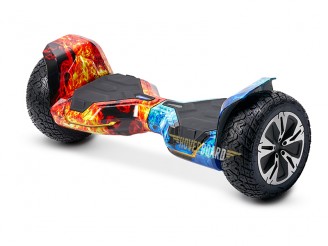
- Motor Vehicle Requirements: Since hoverboard are classified as motor vehicles, they require the following to be road-legal:
- Insurance: Privately owned hoverboard cannot be insured for use on public roads because they fail to comply with the required construction and safety regulations.
- Vehicle Tax and Registration: hoverboard cannot be taxed or registered with the DVLA.
- Driving Licence: A legitimate driving license is necessary, and hoverboard do not have a designated license category.
- Roadworthiness: They fail to comply with the technical requirements (such as lighting, signaling, and braking systems) necessary for road vehicles.
- Pavement Prohibition: Even if hoverboard were to meet road vehicle standards, they are still expressly prohibited from being used on pavements. This is a violation under Section 72 of the Highway Act 1835, which forbids riding any "carriage" on a footpath. Although this law is old, it has been consistently enforced for modern devices such as Segways and hoverboards.
Other Public Areas: The prohibition covers not only roads and sidewalks but also other public areas, including:



- Cycle lanes
- Parks
- Public car parks
- University campuses
- Shopping centres
- Any other land to which the public has access without express permission.
Consequences of Illegal Use
Law enforcement guidelines also outline the possible consequences for individuals found using hoverboard in restricted zones. These violations are significant and can lead to severe outcomes.
- Fines: Riders can face fixed penalty notices.
- Penalty Points: Points may be added to a driving license, or if the person does not possess a license, points can accumulate, potentially affecting their future eligibility to acquire one. Gathering an excessive number of points can result in being banned from driving.
- Vehicle Seizure: Law enforcement is authorised to confiscate and impound hoverboard that are illegally used in public.
Local law enforcement agencies frequently release advisories and conduct public education initiatives to ensure that community members are aware of these limitations. Their main focus is on public safety, considering the risk of accidents involving pedestrians or other vehicles, and the absence of safety features on many hoverboard compared to standard road vehicles.
The "Only" Legal Place: Private Land
The clear directive from law enforcement is that the sole location where a hoverboard can be legally used in the UK is on private property, and solely with the landowner's explicit consent. This implies:
- Your Own Property: Riding within your own garden, driveway, or private estate is permissible.
- With Landowner's Consent: Should you desire to ride on private property owned by someone else, you must secure their consent in advance. This rule also pertains to commercial venues that may offer specific zones for such activities.
What the Police Are NOT Saying
It is crucial to make it clear that the police are not "prohibiting" the purchase or possession of hoverboard for kids. You are legally allowed to buy and own one. Their advice specifically addresses where these devices may be operated. Additionally, the police are not implying that hoverboard are inherently hazardous when used properly in a controlled, private setting. The concern lies in their appropriateness and legality for the intricate, shared areas of public roads and sidewalks.
Conclusion
The UK police's advice regarding hoverboard mirrors the existing legal structure. Their communication to the public is straightforward: although these gadgets provide an innovative mode of personal transportation, using them in public spaces is prohibited and may result in substantial penalties. For those who own hoverboards, it is crucial to follow this advice by limiting their use to private property with consent, thereby remaining compliant with the law and safeguarding personal safety.